Tuesday, April 7, 2009

Shortness of Breath x 2 days

Age, circumstance, and anything else I feel like has been changed.
This unit was dispatched to a 76yo M C/C SOB x2 days. Pt found seated in chair, w/ patent airway, no obvious respiratory distress, and no apparent life threatening airway. Pt states concern for pneumonia. Pt denies CP. Rhonchi bilateral lower lobes. HR 62, BP 128/70, RR 18, SaO2 97% r/a. Placed on O2 @ 2lpm via NC. SOB gradual w/o pain, worse with exertion, better with rest, "can't catch breath." Pt has no PMD, denies any prior PMD visits, no meds, NKDA. Pt seated fowlers on stretcher, seatbelts secured, taken via stretcher to ambulance. 3-lead monitor shows sinus brady, frequent PVCs, ST elev II/III. 12L ECG shows 2mm ST elev II/III/aVF w/ reciprocal changes I/aVL, ST depression V2-V5. Pt vital signs unchanged, denies CP. Feels "better" w/ O2. 4x 81mg ASA PO. Code STEMI alert given to receiving hospital, no questions. Care transferred to Cath Lab, written and verbal report given to receiving nurse.
We got to watch the cath lab at work:
  • RCA: right marginal artery occlusion
  • LAD: diagonal artery occlusion
  • CX: complete circumflex occlusion
No stents placed, scheduled for CABG.

Tuesday, March 24, 2009

A Difference in Education

You learn interesting things about yourself based on why you miss questions on a test. For instance, on Monday night it became apparent that I have the biochemistry education of a lower order ape. I can speak in big medical terms, but fundamentally my understanding is along the lines of, "air goes in and out, blood goes round and round."

This isn't necessarily a bad thing, my degree is in computer science. So as a programmer, I find that my understanding is based on my rough implementations in code rather than the actual biochemical mechanisms. This is useful in terms of my own understanding, but hardly common ground with other students.

I think I need to take some biochemistry courses so I'm not dragging my knuckles on the floor of the ambulance.

Tuesday, March 3, 2009

Exceptions and Constructors

You should never include any work in a constructor which may leave the object in an inconsistant state. Constructors should be atomic and consistant. You should avoid having side effects in a constructor. However, sometimes you cannot avoid doing additional work in a constructor.

For example, you are designing a stream like class which acquires an unmanaged resource in the constructor. Following RAII, you implement the necessary logic to clean up your unmanaged resource in Dispose and Finalize. Given the following pseudo-code, what is a possible error condition we are not current designed to handle:
public MyType()
{
Check.Invariant(argumentInvariant1);
// ...
Check.Invariant(argumentInvariantN);

// 1. ACQUIRE
this.AcquireUnmanagedResource();

// 2. Set up our base properties from the resource
this.RetrieveConfiguration();
}

~MyType()
{
this.Dispose(false);
}

public void Dispose()
{
this.Dispose(true);
GC.SupressFinalize(this);
}

private void Dispose(bool disposing)
{
if (!this.isDisposed)
{
// RELEASE
this.ReleaseUnmanagedResource();

if (disposing)
{
this.DisposeManagedResources();
}
}
}
What would happen if #2 threw an exception? Well, it is more obvious in this example than in most code in the wild, but our Dispose or Finalize will not be called! Our unmanaged resource will not be released, and we will be leaked.

An appropriate solution would, perhaps, be the following modification to the constructor:
public MyType()
{
Check.Invariant(argumentInvariant1);
// ...
Check.Invariant(argumentInvariantN);

try
{
// 1. ACQUIRE
this.AcquireUnmanagedResource();

// 2. Set up our base properties from the resource
this.RetrieveConfiguration();
}
catch(Exception)
{
// RELEASE
this.Dispose(true);

throw; // propagate the exception
}
}
Now, if #2 should fail we will release the unmanaged resource and not leak anything. Keep in mind this will require a Dispose method which is resistant to an inconsistant object state. However, the design contract for IDisposable basically requires this anyways.

Tuesday, February 17, 2009

Basics and Paramedics

Recently I was asked what the difference was between an EMT-Basic and a Paramedic. It is simple, Basics have the ground beneath their feet, four walls around them, and a roof above their head. More importantly to the Basic, and to their patient, is the door. Behind this door is a Paramedic. A Paramedic who doesn't know if they are on the ground or falling to meet the ground. They really only have the walls they've put up around them. At least at this point, I can't fathom the ceiling for a Paramedic. The responsibilities and expectations are limitless when looking through the door at the Basic.

Monday, February 16, 2009

C# XML Documentation Guide

Today I found what is perhaps the most comprehensive guide to writing good C# XML Documentation. Many thanks to the Dynicity guys for producing this.

Saturday, February 7, 2009

Self-inflicted, unintentional GSW

You can imagine the thought process associated with being dispatched to your first gun shot wound. The narrative has been altered to change specificity and situation.
This unit was dispatched to a 32yo male w/ self-inflicted unintentional GSW x1 to the hand. Additional information from caller while en route informed pt conscious and alert. Dispatch notified LEO, en route. Arrived on scene to find two bystanders in an open field. Pt found sitting in passenger seat of van with ~5cm hole in the front windshield. No gun visible. LEO arrived ~2 min after EMS, secured .40cal handgun. Pt states he reached for the handgun on the floorboard of the van and it went off accidentally. Pt had a patent airway, no respiratory distress, and displayed his L hand which had no apparent active bleeding. Rapid trauma exam revealed no life threatening injuries. <5cc blood estimated lost. L hand had ~1cm entrance wound on anterior palmar aspect ~3cm from medial border and ~2cm from wrist. ~1cm exit wound on medial border ~3cm from entrance and ~4cm from wrist. Powder burns noted at entrance wound. Skin warm/dry, pupils sluggish, pulse fast/bounding. Pt refused further physical examination. Wound irrigated with sterile water, bandaged, wrapped with gauze. Pt refused further treatment. Pt refused transport. Pt advised of treatment/transport options and injury severity. Pt signed refusal. LEO witnessed refusal.

Sunday, January 18, 2009

Paramedic Clinicals

So Friday was the first of many clinical shifts (500 hours total) I will be doing as a Paramedic student. My patients ranged in age from 11 to 92, with problems ranging from fractures to overdoses to a suspected DVT. I triaged patients, assessed vitals, started IV's, pushed medications, wiped asses, and did everything else I could find to do.

One aspect of our clinical time is a state requirement that we accomplish a given number of procedures. This is both a good and a bad thing. You want your certified Paramedics to be useful when they get their card. You also want your new Paramedics to be more than just some monkey starting your IV. But when you take those requirements and add to it a finite amount of patients and a finite amount of clinical time, an obvious problem is created. Any economist will tell you that the students will apply game theory to patient care, asking the question, "what interventions can I use," rather than, "what interventions, if any, are appropriate".

More players enter the game when you show your preceptor the clinical guidelines which include these requirements. Suddenly, you have a proxy, rummaging through charts looking for flags indicating a required intervention! This isn't necessarily a bad thing, I obviously need to be competent at starting IV's, administering medication, birthing children, et cetera. I just should not be particularly concerned about only having 500 hours to accomplish X number of IV starts, Y medication administrations, Z child births, et cetera ad nauseam.

The state clinical requirements should make the student more concerned with the academic approach, starting with patient assessment and ending with a clear and organized treatment plan. It shouldn't matter if I'm the one providing any required interventions, just that I'm able to provide any appropriate intervention when required.

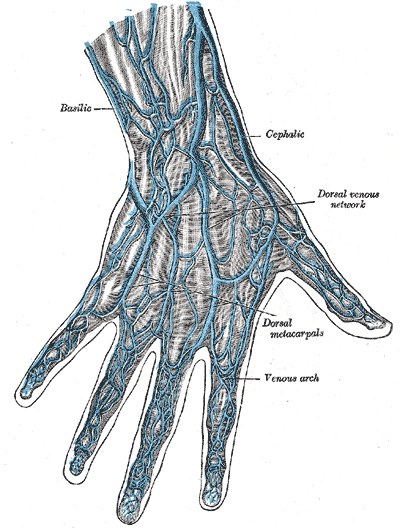
So you can see why I'd find it funny that my first IV stick as a medic student was a heavily tattooed habitual IV drug user requiring cardiac blood labs. He was nearly devoid of useful veins and definately required blood drawn. A disgustingly green paramedic student tends to fall towards the bottom of the list of people you'd like performing this procedure. But not being one to avoid a challenge, I tried to follow some scar tissue to what felt like a vein, but my angle of attack was too high and I nicked and rolled it.

Swiiing and a miss.

Even with a little extra traction and some fancy needle movement I couldn't establish a patent line. The patient wisely asked that the nurse try the next stick, due to that being the only vein we could find sans a vein running along his thumb. I'm sure the fact that my shirt said EMS Intern on it played no small role in his decision to ask that somebody else make the try.

My mind is still debating if there was more learned attempting his IV or reading his ECG.

Monday, December 22, 2008

California Supreme Court Redefines Good Samaritan

I was fairly shocked to learn the normally reasonable California Supreme Court  botch a case regarding Good Samaritan laws. An individual--who had been drinking and smoking marijuana--rendered aid at a motor vehicle accident pulling the driver from the allegedly smoking car. The driver suffered traumatic injuries to her liver, requiring surgery, and to her spine. Secondary to either the accident or the extrication, the driver suffered paraplegia and brought a negligence suit against the individual who had extricated her from the vehicle.

At trial, the original court agreed the defendant was covered under the Good Samaritan laws, as would be expected, however, on appeal this decision was overturned. The appeals court found that the statute covers only "emergency medical care" (ed: original emphasis) and not the actions taken by the defendant. Eventually the appeals reached the state supreme court, and the court found in favor of the plaintiff agreeing with the appeals court's finding that the care provided by the defendant--removing the plaintiff from her vehicle--was inconsistant with the language and intent of the applicable Good Samaritan statutes.

Huh?

Somehow, somewhere, the California Supreme Court has forgotten that removing your patient from harms way is the first step in patient care. Well okay, it comes after your safety, your partner's safety, and any bystander's safety (scene safe? BSI?). Still, if a patient is in a burning car, the first thing to do is remove the patient from the burning car. You cannot be expected to provide emergency medical care if the scene is not safe for you, your partner, or your patient. It stands to reason then, that the most fundamental form of Basic Life Support is removing your patient from danger.

What the California Supreme Court has done with their overly pedantic finding is to redefine a Good Samaritan and to change the rules of the game. The defendant in this case probably should be sued for negligence given all of the other facts in the case, however, they shouldn't be exempt from Good Samaritan laws merely because of a language technicality. People are already hesitant enough to provide bystander care with how lawsuit happy our society is, and now people in California have even less of a reason to provide care. Hopefully the legislature will iron this issue out in the new year.

Thursday, December 18, 2008

Wound Care and Non-Adherent Dressings

On our ambulance, the two least used forms of dressings are occlusive dressings and non-adherent dressings. It is easy to explain why we don't use occlusive dressings (ed: sucking chest wounds, while popular on ER, are NOT the mainstay of our site EMS), but it is a little bit harder to explain why we don't use non-adherent dressings often.

Typical wound care for an EMT-Basic consists of slapping a stack of 2x2, 3x3, or 4x4 gauze pads on the wound while applying direct pressure. If we have other things to do we'll ask the patient to hold the gauze, or tape it down. I can't ever recall ever using a non-adherent dressing or being asked for one; moreover, our wound care protocols do not give mention to them. Interestingly enough, before yesterday I probably would have been unable to give an indication for a non-adherent dressing without a little bit of thought.

Nothing could teach me the primary indication of a non-adherent dressing better than when I injured my knee yesterday. Just two small gouges, nothing big. I irrigated and debrided the wound, applied a 2x2" gauze, and secured the bandage with 1" cloth tape.

When I went to take a look at the wound that night, I was somewhat suprised to find the gauze had become part of the clot. I was even more supprised at the level of pain I was confronted with while removing the gauze-clot. The woven gauze had to be removed one strand at a time, even after applying warm water. It was at this point I had an epiphany.


My jump bag contains 4x4" non-adherent dressings that, surmising from their name, would not adhere to my wound like the gauze had. Sure enough, after cutting down the dressing to form a smaller 2x2" form, I applied the non-adherent dressing under a 2x2" gauze dressing, and taped the new and improved bandage down. Removal this morning was pain free, and further more I did not have to break any clots that had formed!

It only takes 5 seconds of googling to find that everyone from studies, to nurses, to patients emphatically support non-adherent dressings for wound care. Thanks to a personal lesson in pain, my own protocol for wound care will now include a non-adherent dressing for any wound (which will produce an exudate) upon which a dry sterile dressing will sit.

Sunday, November 9, 2008

Studying Paramedicine as a Software Engineer

Paramedic school has been grueling giving the concomitant (bordering on comorbid) factor of work. However, that will be my last complaint on that because as a general rule, when I want to do something, I go and do it. We've finished anatomy and physiology, pathophysiology, medicolegal concerns, various introductory topics, and most recently pharmocology.

We had to turn in cards on 72 drugs (of the 129 paramedics in NC could give), and I decided to make life easier for myself using a small program. LINQ-to-XML plus WPF (and some regular expressions to parse human readable dosages) allowed me to rapidly transcribe all of the useful information into an XML format. I then put together a quick XSLT file to make an OOXML file that I could print and paste to 3x5 index cards (ed: I left off side effects and had to add those by hand, wraaa!). Did I mention the program quizzes me on trade/generic names and pharmacological class? I'll try and release the quizzing features as a webpage at some point, however, my studies come first.


Right now we're having medical math beaten into us, which isn't particularly hard for those of us with strong mathematics backgrounds (ed: except when you suck at basic math). However, I noticed that many students had a hard time connecting the action of calculating a dosage with the mathematics to do the calculation. I put together a presentation to help bridge that gap, "Visualizing Medical Math" (PPTX). Hopefully this will help folks who are struggling with medical math.

(ed: for those of you without PowerPoint 2007 or access to a viewer, "Visualizing Medical Math" PDF).