Sunday, January 18, 2009

Paramedic Clinicals

So Friday was the first of many clinical shifts (500 hours total) I will be doing as a Paramedic student. My patients ranged in age from 11 to 92, with problems ranging from fractures to overdoses to a suspected DVT. I triaged patients, assessed vitals, started IV's, pushed medications, wiped asses, and did everything else I could find to do.

One aspect of our clinical time is a state requirement that we accomplish a given number of procedures. This is both a good and a bad thing. You want your certified Paramedics to be useful when they get their card. You also want your new Paramedics to be more than just some monkey starting your IV. But when you take those requirements and add to it a finite amount of patients and a finite amount of clinical time, an obvious problem is created. Any economist will tell you that the students will apply game theory to patient care, asking the question, "what interventions can I use," rather than, "what interventions, if any, are appropriate".

More players enter the game when you show your preceptor the clinical guidelines which include these requirements. Suddenly, you have a proxy, rummaging through charts looking for flags indicating a required intervention! This isn't necessarily a bad thing, I obviously need to be competent at starting IV's, administering medication, birthing children, et cetera. I just should not be particularly concerned about only having 500 hours to accomplish X number of IV starts, Y medication administrations, Z child births, et cetera ad nauseam.

The state clinical requirements should make the student more concerned with the academic approach, starting with patient assessment and ending with a clear and organized treatment plan. It shouldn't matter if I'm the one providing any required interventions, just that I'm able to provide any appropriate intervention when required.

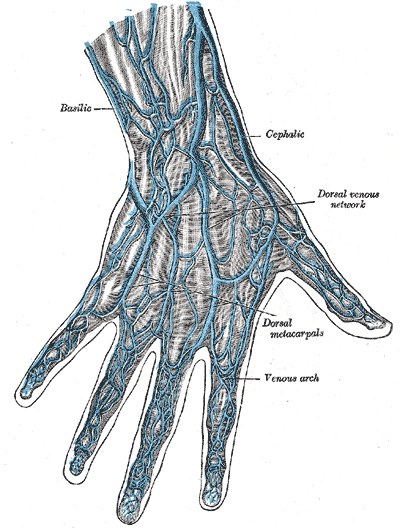
So you can see why I'd find it funny that my first IV stick as a medic student was a heavily tattooed habitual IV drug user requiring cardiac blood labs. He was nearly devoid of useful veins and definately required blood drawn. A disgustingly green paramedic student tends to fall towards the bottom of the list of people you'd like performing this procedure. But not being one to avoid a challenge, I tried to follow some scar tissue to what felt like a vein, but my angle of attack was too high and I nicked and rolled it.

Swiiing and a miss.

Even with a little extra traction and some fancy needle movement I couldn't establish a patent line. The patient wisely asked that the nurse try the next stick, due to that being the only vein we could find sans a vein running along his thumb. I'm sure the fact that my shirt said EMS Intern on it played no small role in his decision to ask that somebody else make the try.

My mind is still debating if there was more learned attempting his IV or reading his ECG.

Monday, December 22, 2008

California Supreme Court Redefines Good Samaritan

I was fairly shocked to learn the normally reasonable California Supreme Court  botch a case regarding Good Samaritan laws. An individual--who had been drinking and smoking marijuana--rendered aid at a motor vehicle accident pulling the driver from the allegedly smoking car. The driver suffered traumatic injuries to her liver, requiring surgery, and to her spine. Secondary to either the accident or the extrication, the driver suffered paraplegia and brought a negligence suit against the individual who had extricated her from the vehicle.

At trial, the original court agreed the defendant was covered under the Good Samaritan laws, as would be expected, however, on appeal this decision was overturned. The appeals court found that the statute covers only "emergency medical care" (ed: original emphasis) and not the actions taken by the defendant. Eventually the appeals reached the state supreme court, and the court found in favor of the plaintiff agreeing with the appeals court's finding that the care provided by the defendant--removing the plaintiff from her vehicle--was inconsistant with the language and intent of the applicable Good Samaritan statutes.

Huh?

Somehow, somewhere, the California Supreme Court has forgotten that removing your patient from harms way is the first step in patient care. Well okay, it comes after your safety, your partner's safety, and any bystander's safety (scene safe? BSI?). Still, if a patient is in a burning car, the first thing to do is remove the patient from the burning car. You cannot be expected to provide emergency medical care if the scene is not safe for you, your partner, or your patient. It stands to reason then, that the most fundamental form of Basic Life Support is removing your patient from danger.

What the California Supreme Court has done with their overly pedantic finding is to redefine a Good Samaritan and to change the rules of the game. The defendant in this case probably should be sued for negligence given all of the other facts in the case, however, they shouldn't be exempt from Good Samaritan laws merely because of a language technicality. People are already hesitant enough to provide bystander care with how lawsuit happy our society is, and now people in California have even less of a reason to provide care. Hopefully the legislature will iron this issue out in the new year.

Thursday, December 18, 2008

Wound Care and Non-Adherent Dressings

On our ambulance, the two least used forms of dressings are occlusive dressings and non-adherent dressings. It is easy to explain why we don't use occlusive dressings (ed: sucking chest wounds, while popular on ER, are NOT the mainstay of our site EMS), but it is a little bit harder to explain why we don't use non-adherent dressings often.

Typical wound care for an EMT-Basic consists of slapping a stack of 2x2, 3x3, or 4x4 gauze pads on the wound while applying direct pressure. If we have other things to do we'll ask the patient to hold the gauze, or tape it down. I can't ever recall ever using a non-adherent dressing or being asked for one; moreover, our wound care protocols do not give mention to them. Interestingly enough, before yesterday I probably would have been unable to give an indication for a non-adherent dressing without a little bit of thought.

Nothing could teach me the primary indication of a non-adherent dressing better than when I injured my knee yesterday. Just two small gouges, nothing big. I irrigated and debrided the wound, applied a 2x2" gauze, and secured the bandage with 1" cloth tape.

When I went to take a look at the wound that night, I was somewhat suprised to find the gauze had become part of the clot. I was even more supprised at the level of pain I was confronted with while removing the gauze-clot. The woven gauze had to be removed one strand at a time, even after applying warm water. It was at this point I had an epiphany.


My jump bag contains 4x4" non-adherent dressings that, surmising from their name, would not adhere to my wound like the gauze had. Sure enough, after cutting down the dressing to form a smaller 2x2" form, I applied the non-adherent dressing under a 2x2" gauze dressing, and taped the new and improved bandage down. Removal this morning was pain free, and further more I did not have to break any clots that had formed!

It only takes 5 seconds of googling to find that everyone from studies, to nurses, to patients emphatically support non-adherent dressings for wound care. Thanks to a personal lesson in pain, my own protocol for wound care will now include a non-adherent dressing for any wound (which will produce an exudate) upon which a dry sterile dressing will sit.

Sunday, November 9, 2008

Studying Paramedicine as a Software Engineer

Paramedic school has been grueling giving the concomitant (bordering on comorbid) factor of work. However, that will be my last complaint on that because as a general rule, when I want to do something, I go and do it. We've finished anatomy and physiology, pathophysiology, medicolegal concerns, various introductory topics, and most recently pharmocology.

We had to turn in cards on 72 drugs (of the 129 paramedics in NC could give), and I decided to make life easier for myself using a small program. LINQ-to-XML plus WPF (and some regular expressions to parse human readable dosages) allowed me to rapidly transcribe all of the useful information into an XML format. I then put together a quick XSLT file to make an OOXML file that I could print and paste to 3x5 index cards (ed: I left off side effects and had to add those by hand, wraaa!). Did I mention the program quizzes me on trade/generic names and pharmacological class? I'll try and release the quizzing features as a webpage at some point, however, my studies come first.


Right now we're having medical math beaten into us, which isn't particularly hard for those of us with strong mathematics backgrounds (ed: except when you suck at basic math). However, I noticed that many students had a hard time connecting the action of calculating a dosage with the mathematics to do the calculation. I put together a presentation to help bridge that gap, "Visualizing Medical Math" (PPTX). Hopefully this will help folks who are struggling with medical math.

(ed: for those of you without PowerPoint 2007 or access to a viewer, "Visualizing Medical Math" PDF).

Tuesday, October 21, 2008

Paramedic Student

Last night I became a paramedic student. From now until October 2009, I'll be in class three nights a week and the occasional Saturday. There are just over 30 students in our class, with a 60-40 split of EMT-Intermediates and EMT-Basics. Three students from my EMT-Basic class returned to study paramedicine, and I'm looking forward to studying with them again.

We have homework right out the gate, which isn't suprising giving the pace of the course. I'll be posting the thousand word paper on EMS history, the future of EMS, and where I fit into it all on this blog. We also have to do cards on 129 drugs available to paramedics in the great state of North Carolina. Each card will have the generic name, trade name, mechanism of action, dosages (all dosage possibilities, adult and pediatric), indications, contraindications, and side effects. Interestingly enough, most services only carry a fraction of these for emergent care, and often only carry specialized subsets for acute care. Regardless, I'm looking forward to the pharmacology review.

So, look forward to seeing more postings on my time as a paramedic student, and maybe postings on my clinicals during the new year. I refrain from posting about people I treat at work only due to the "small town" feel at work. When out in the world, I'll probably be able to write in generality.

Thursday, July 31, 2008

Fatal error LNK1171: unable to load c2.dll

We had an interesting problem arise where linking a Release mode static library written in C with a Fortran application using the Premier Partner edition of Visual Studio that ships with Intel Visual FORTRAN 10 would die at the linking stage. This happened late in the game as the debug mode builds of the C library did not exhibit this error. To make matters worse, if users had any other version of Visual Studio with just the Intel Visual FORTRAN Compiler Integration installed, no such problems arose.

Our first step was to install the Platform SDK: no joy. The second step was to manually copy the DLL's required (there are actually 3 DLL's you need) from a working install to the non-working install: success!

So, what could possibly be the problem here?

No amount of searching could turn up the issue, so a ticket was opened with Intel's Premier Support. Well, we should have done this from the beginning because it appears that the compiler writers themselves know a lot about the compiler toolchain; fancy that. The (relevant) response from Intel:
c2.dll is used by the Microsoft Visual C++ compiler to perform whole-program optimization. Might it be that this "release" C library was compiled with that option? If so, you will require Visual C++ to be installed in order to build using that library.

My advice is that if you know you will be linking a C library on a system with only Visual Studio Premier Partner Edition installed that you be sure that Whole Program Optimization is disabled, as otherwise Fortran programmers will not be able to use it.
Sure enough, disabling Whole Program Optimization on the Release mode builds of the C static library solved all of our issues.

Wednesday, July 16, 2008

Day 14: Denali National Park

We're 11 miles down Alaska Highway 3 (Parks Highway) at a school library. The weather is a bit bleh so we're unable to hike at the moment. We've now gone over 6500 miles on the road and are getting ready to make our return back to North Carolina. Here are some assorted photos from the park and our ascent of Mt. Healy (4500ft).


Tuesday, July 15, 2008

Day 13: Anchorage / Denali National Park

So now we've been on the road for nearly two weeks, and are at our halfway point. We've been to Tok, Delta Junctions, Fairbanks, Palmer, Valdez, Glennallen, Anchorage, and Seward. We've hiked to some glaciers, camped near some glaciers, and are about to spend a few nights in Denali National Park. I don't really have much more time in front of this computer, so I'll just leave you with a picture from the beginning (Dawson Creek, BC, Canada) and the end of the Alaska Highway (Delta Junction, AK).


Thursday, July 10, 2008

Day 8: Driving to Alaska

So we're at a public library in Fort St. John, BC, Canada, checking our email, chatting it up with friends. We've been on the road for 8 days and have driven 3715 miles (5975 km). We've seen ten states and two Canadian provences.

Travel Log (subtract 1581 original miles for total distance)
  • Greenburg, IN - Odo 2292 miles - $4.129/gal - 15.153gal
  • Mt. Prospect, IL - Odo 2566 miles
  • Janesville, WI - Odo 2652 miles - $4.169/gal - 14.936gal
  • Oxford, WI - Odo 2746 miles
  • King Island, MN - Odo 2985 miles - $3.919/gal - 13.225gal
  • Little Falls, MN - Odo 3064 miles
  • Fargo, ND - Odo 3237 miles - $3.899/gal - 10.289gal (10% ethanol)
  • Jamestown, ND - Odo 3328 miles
  • Dickenson, ND - Odo 3501 miles - $4.149/gal - 12.717gal
  • Medroa, ND - Odo 3567 miles
  • Miles City, MT - Odo 3747 miles - $4.099/gal - 12.349gal
  • Livingston, MT - Odo 4002 miles
  • Big Timber, MT - Odo 4033 miles - $4.099/gal - 18.438gal (85.5 octane, 5gal spare)
  • Ackley Lake State Park, MT - Odo 4143 miles
  • Great Falls, MT - Odo 42131 miles - $4.099/gal - 8.158gal
  • Calgary, AB, Canada - Odo 4570 miles (7355 km) - CAD1.379/L - 51.793L
  • Lake Louise, AB, Canada - Odo 4673 miles (7520 km)
  • Drayton Valley, AB, Canada - Odo 4897 miles (7881 km) - CAD1.349/L - 49.314L
  • Dawson Creek, BC, Canada - Odo 5239 miles (8431 km) - CAD1.419/L - 56.675L (10% ethanol)
  • Kiskatinaw, BC, Canada - Odo 5259 miles (8464 km)
  • Fort St. John, BC, Canada - Odo 5296 miles (8523 km)

Next time I'll post it will probably be in Fairbanks, AK on the 13th.

Thursday, July 3, 2008

Destination Alaska


So yesterday my youngest brother and I started our drive to Alaska. 10,200 miles in total, we've gone just over 500 on our first leg. We're in West Virginia with our other brother and his fiancée, both Marshall students. Tomorrow we are headed to Chicago for the fourth and a beach party. My new car is getting about 25mpg while it is still getting broken in. I'll keep a log going of the miles driven, gas consumed, and prices per gallon whenever I get the chance.

Itinerary
  • 03 July - Huntington, WV
  • 04 July - Chicago, IL
  • 05 July - Oxford, WI and Little Falls, MN
  • 06 July - Medora, ND
  • 07 July - Great Falls, MT
  • 08 July - Banff, AB Canada
  • When I figure out the rest I'll let you know!
Travel Log
  • Wilmington, NC - Odo 1581 miles - Gas $3.979 - 8.958gal
  • Cary, NC - Odo 1715 miles
  • Wytheville, VA - Odo 1907 miles - $3.899 - 13.658gal
  • Huntington, WV - Odo 2084 miles